You might think tracking and visibility are the same. But in reality, they play very different roles.
At first, tracking and visibility seem interchangeable.
A shipment shows “in transit,” which may be the same status as yesterday. The ETA hasn’t changed. Nothing triggers an alert. Then, hours later, an “unexpected delay” update appears. Now, it’s too late to reroute, to notify the customer in advance, and to avoid a support escalation.
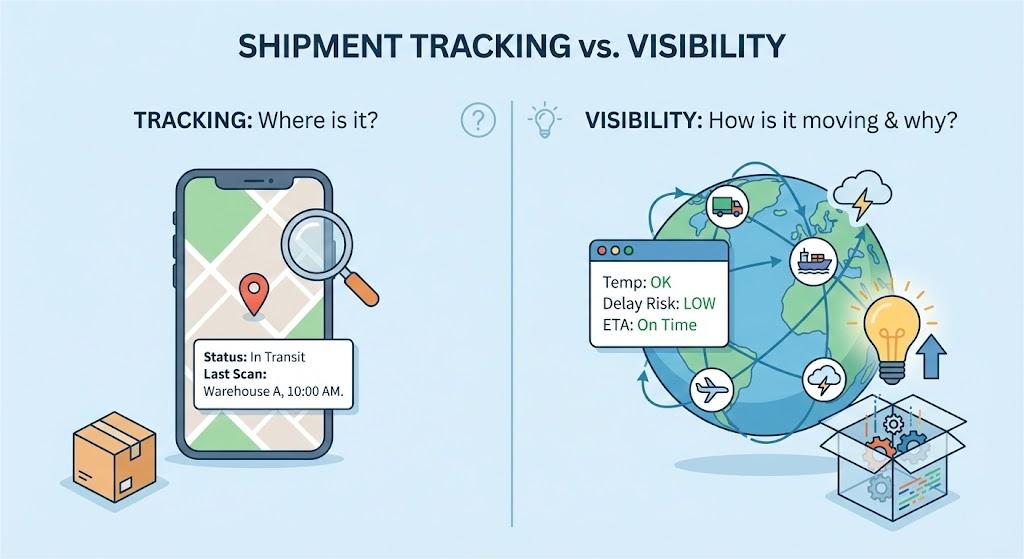
That’s where you’ll see the difference: tracking only tells you what happened, while visibility tells you what’s about to happen.
In this article, we’ll define and compare shipment tracking and shipment visibility to clear up any confusion. We’ll also show when tracking is enough, and explain how teams can move from tracking to visibility without replacing tracking.
What Is Shipment Tracking?
Shipment tracking is the process of monitoring a shipment as it moves from the sender to the recipient’s doorstep. It answers the questions: “What’s the delivery status?” “Where is the package now?” and “Has it been delivered?”
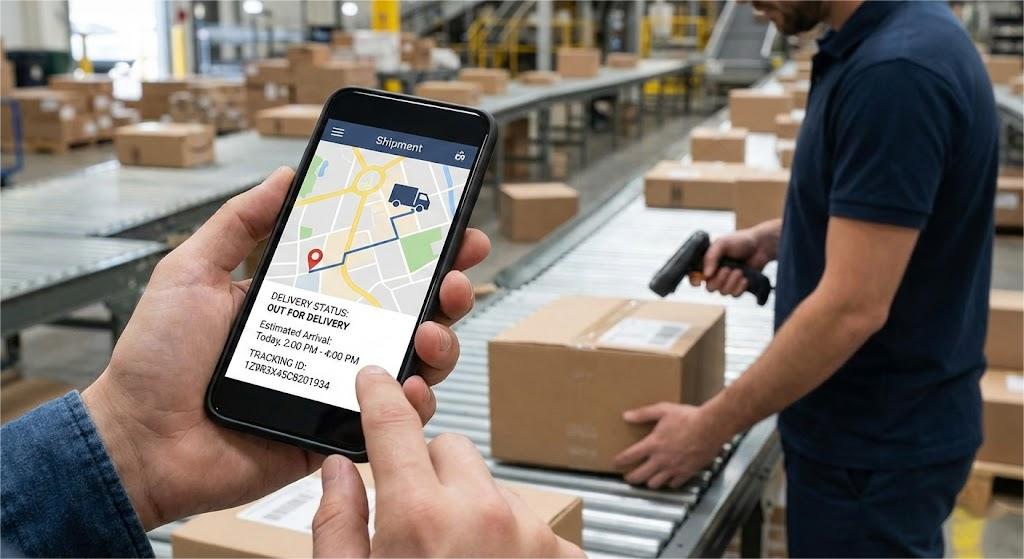
Tracking information includes the shipment’s location and status. It is often updated based on carrier scans during transit. And each scan happens at a specific milestone and is usually displayed using basic status: picked up, in transit, out for delivery, or delivered.
Shipment tracking is great for progress confirmation (and keeping customers informed). But it is limited to status updates alone. While it can show that a package is “delayed” when it does not reach the recipient on time, it doesn’t explain why.
Tracking also does not indicate signs of risks during delivery. Whether the customer’s order is on schedule or late by a few days, the status can only be marked as “In transit.” As a result, tracking alone does not reflect whether a shipment needs immediate attention or not.
What Is Shipment Visibility?
Shipment visibility is an operational capability that provides teams with a real-time view of shipments across the entire logistics process.
With these timely updates, it can also provide predictive information, such as delivery expectations and potential delays or exceptions, which helps teams anticipate shipment issues before they occur.
On top of that, visibility offers insights to support strategic business decisions. For example, teams can use it to track carrier performance, evaluate them, and choose more efficient carrier partners.
Visibility helps find answers to: “Is the package on track?” “What’s at risk?” and “What should we do next?”
It allows teams to concentrate on the shipments that need the most attention, without having to manually scan and analyze each package. Shipment visibility makes logistics operations smarter and more proactive.
Shipment Tracking vs Shipment Visibility at a Glance
To make it easier to understand how each approach works, we made a table below to outline the key differences between shipment tracking and shipment visibility across several operational dimensions.
| Dimension | Shipment Tracking | Shipment Visibility |
| Core question | Where is the shipment right now? Has it been delivered? | Is the shipment on track? What risks are emerging? What should the team do next? |
| Scope | Shipment-level status and location updates | End-to-end oversight across shipments, routes, and carriers |
| Signal type | Mostly reactive status updates based on carrier scans | Proactive signals that surface risk and exceptions earlier |
| Actionability | Limited. It basically supports lookup and confirmation. | High. It focuses on prioritization, escalation, and operational workflows |
| Exception handling | Exceptions are usually found manually and handled on a case-by-case basis | Exceptions are detected earlier and handled through defined processes |
| Primary users | Shoppers and customer support teams | Logistics operations teams, supply chain teams, and managers |
Key Differences Between Shipment Tracking and Shipment Visibility
1. Reactive Status vs Proactive Signals
Shipment tracking is reactive by nature. Stakeholders manually check shipment statuses to receive updates, while operations teams rely on carrier scans to determine shipment locations.
In comparison, shipment visibility is proactive. It shows possible logistics issues and enables teams to intervene before they become operational problems.
Imagine there’s congestion at one of your regular ports. Shipment visibility can alert you that shipments are sitting longer than expected. Your team can review the current situation and check which orders are at risk of delay. If the transit time extends, they can decide whether to reroute inventory before delivery timelines are affected.
Reactive tracking connects growth directly to headcount. More orders mean more WISMO tickets, more manual checks, and more escalations. With visibility, the same team can handle higher shipment volumes while identifying risks and preventing issues.
2. From Shipment Status to Network Intelligence
Shipment tracking focuses on individual shipments. Each lookup shows the latest status of a package, which works well when the concern is limited to a specific order.
But shipment visibility delivers network-level intelligence. It aggregates data within shipments, carriers, routes, and regions so teams can see what’s working, what’s changing, and what keeps causing problems.
Delays become easier to recognize as trends (and not isolated incidents) with that wider perspective. Teams can also see when issues begin to cluster around certain routes or operations and step in if needed.
Shipment visibility pulls scattered tracking data into one connected view. That context helps teams plan more effectively, respond faster, and continuously improve performance across the supply chain.
3. Customer Tracking vs Supply Chain Performance
While shipment tracking answers customer-facing questions like “Where is my order?”, shipment visibility provides a broader view of supply chain performance. It unfolds trends in delivery reliability, bottlenecks in fulfillment, and patterns in carrier performance.
Teams can make “more grounded” decisions on inventory, capacity planning, and resource allocation, thanks to the predictive data they get.
In short, tracking keeps customers informed. But visibility helps the business improve performance at different levels.
When Is Shipment Tracking Enough?
By now, you’re probably wondering if shipment tracking alone is enough for your business.
If your store is still in its early days, a simple order tracking app is more than enough. It can handle most customer “Where Is My Order?” questions, as you’ll have a dashboard showing all your shipments in one place.
If you want to take things a step further, you could offer a branded tracking page and automated shipping notifications.
At this stage, rather than actively managing every twist and turn in logistics, your focus should be on minimizing the impact of shipping on the post-purchase experience.
Reliable shipment tracking is also the first step of any shipping operation. Every shipment visibility platform relies on tracking data, so having this foundation in place is essential.
If you need a quick way to check whether tracking is still sufficient, ask yourself: if most of your shipping questions are along the lines of “Where is this order?” then tracking is probably doing the job.
When Does Shipment Visibility Become Necessary?
Shipment visibility becomes necessary when transport issues start to bring customer complaints. It’s also essential when delays and exceptions increase operational costs or when teams need reliable data to evaluate routes, carriers, and logistics performance. At that point, manual shipment tracking won’t be sufficient.
Tracking often works well early on. As volume increases and operations expand, common challenges quickly emerge.
Volume is usually the first signal. When weekly orders grow from hundreds to thousands, monitoring shipments individually becomes inefficient. Issues are easier to miss, and problems often surface only after customers start reaching out.
Cross-border shipping adds another layer of uncertainty. International deliveries introduce more variable transit times, while small disruptions such as customs inspections or port congestion can ripple across multiple orders.
Multi-carrier shipping further increases complexity. Each carrier uses different tracking formats and status definitions, which makes consistent monitoring difficult. Without a centralized system, businesses can easily overlook exceptions and delays.
But a shipment visibility platform helps teams detect issues earlier and make data-driven decisions across their operations.
How Shipment Tracking and Shipment Visibility Work Together
Completely transitioning to shipment visibility doesn’t happen overnight for ecommerce teams. They develop their system gradually and build it on their existing tracking systems.
It usually progresses this way: The teams need consistent tracking data within their carriers so they can compare and monitor shipments clearly.
Once they have reliable data, they start to define triggers that signal when something needs their attention.
After that, teams can put basic exception workflows in place. So, in case of delays, holds, or missed handoffs, the right team can review it right away. It doesn’t have to pass between teams or get lost in emails or chats.
With visibility layered on top of tracking, teams start to see recurring trends across multiple shipments. For example, they can identify routes that frequently slow down, allowing them to adjust schedules or re-route shipments before delays accumulate.
So instead of replacing tracking, shipment visibility actually builds on it. It’s the natural next step as logistics complexity increases.
Streamline Logistics Operations with TrackingMore
TrackingMore centralizes data from over 1,500 carriers and 90+ airlines. We process this data to provide standardized updates and offer multiple ways to access it, including a dashboard, API, and webhooks.
Our solution supports a wide range of users. For ecommerce stores, TrackingMore provides tracking and post-purchase tools to enhance customer experience. For logistics providers, marketplaces, and software companies, we deliver enterprise-grade shipment data with SLA guarantees, which allows teams to integrate accurate and reliable information directly into their systems.
Trusted by SHEIN, DJI, Kaufland, and AliExpress, TrackingMore has served over 10,000 brands.
Whether you’re struggling to keep up with multiple carriers, manage exceptions, or provide real-time updates to your customers, TrackingMore gives you a reliable platform to simplify logistics and make smarter operational decisions.
FAQs
No. Shipment tracking provides basic, periodic updates on a package’s shipping status and location, whereas shipment visibility offers real-time updates across the entire supply chain, including predictive analytics and exception alerts. You can also get insights from overall delivery performance, which helps you spot issues early and make better decisions.
Shipment tracking is enough when the shipping process is still simple. For example, order volume is manageable, routes change little, carriers are limited, and delivery issues are rare. When any of these factors grow, such as more orders, multiple carriers, or frequent delays, basic tracking quickly becomes insufficient.
Shipment visibility provides a real-time view of the entire logistics process. Unlike basic tracking, which only reveals a shipment’s location and status, it can also show early warnings of delays and exceptions, as well as predictive delivery time. Visibility helps teams see possible risks and assess carrier and route performance. From there, they can make better decisions to optimize logistics operations.
Shipment visibility is usually shared across teams. It’s used by anyone involved in moving, supporting, or planning orders. That includes:
– Logistics or transportation teams: Track shipments in transit, watch carrier performance, and step in when delays or issues show up.
– Customer support teams: Use reliable delivery information to manage customer communication and set clear delivery expectations.
– Operations or supply chain teams: Plan inventory, warehouse capacity, and staffing based on what’s arriving and when.
– Procurement teams: Monitor inbound orders from suppliers to make sure deliveries stay on schedule.
– Warehouse teams: Prepare docks, labor, and equipment by knowing what shipments are coming in ahead of time.
Easton has 3 years of experience researching and writing about e-commerce and logistics. She enjoys sharing the latest industry trends and insights with readers.