Did you know that ecommerce revenue is expected to reach $5 trillion in 2026? This is from ECDB’s global ecommerce report.
As the ecommerce market continues to grow, competition becomes tighter, and customer expectations keep rising. In this case, ecommerce logistics becomes one of the clearest factors that sets one brand apart from another.
Effective ecommerce logistics can improve operations and create a more reliable post-purchase experience.
In this article, we’ll talk about what ecommerce logistics is, its core components, the challenges it brings, and the best practices you can apply to build a more effective operation.
What is Ecommerce Logistics?
Ecommerce logistics refers to the entire process of managing and delivering items for an online store or marketplace. It includes warehousing, inventory management, order fulfillment, shipping, and even reverse logistics.
We call it the “backbone of online retail” as it keeps orders moving smoothly through all stages and enables businesses to meet customer expectations.
Modern ecommerce logistics doesn’t work the same way as traditional logistics. Here’s a simple comparison between the two:
| Aspect | Ecommerce Logistics | Traditional Logistics |
| Order profile | Smaller, high-frequency orders placed by individual customers | Large, planned shipments with higher unit volumes |
| Processing model | Orders processed shortly after checkout | Shipments scheduled in advance based on production plans and demand forecasts |
| Operational focus | Speed, order accuracy, and delivery visibility, and customer satisfaction | Cost efficiency and large-scale goods movement |
| Delivery model | Delivers parcels directly to end customers | Moves goods between businesses |
Besides smaller order sizes, faster fulfillment speed, ecommerce logistics should meet customer expectations for visibility and communication. This is what makes it more complex than traditional logistics.
Key Components of Ecommerce Logistics
Before you can improve your logistics operations, you need a clear view of what actually makes up the ecommerce logistics system.
Many ecommerce merchants focus only on shipping, but it covers much more than that. Once you know how each piece works, you can identify weak points and prevent issues related to scaling.
Here are the key components of ecommerce logistics.
Warehousing and Fulfillment Centers
Warehousing and fulfillment centers are what we call the “home base” of your products. This is where items are stored, picked, packed, and prepared for shipment.
The fulfillment process has three main models. What the setup is depends on the size of the ecommerce business, available budget, and how much control you want over the customer experience.
- In-house fulfillment: Brands store and ship products themselves. This gives full control over packaging and quality, but costs and workload increase as orders grow.
- Third-party fulfillment: A third-party logistics provider stores inventory and handles shipping on the merchant’s behalf. It supports higher volumes, but lesser control over order handling.
- Dropshipping: Products are shipped directly from the supplier after a customer places an order. It requires little upfront investment, but delivery speed and product quality depend on the supplier.
Each option has its trade-offs, so it’s important to pick the one that best fits your growth strategy.
Inventory Management
Inventory management is the process of tracking and replenishing stock for ecommerce operations. It covers the products you sell: every SKU, size, or color.
By keeping inventory records aligned with real-time sales, it helps reduce the gap between online listings and actual stock availability.
Effective inventory management also helps merchants maintain the right stock levels. Too little inventory can lead to missed sales, while too much can tie up cash in slow-moving products.
To avoid this, merchants need to review past sales trends and seasonal demands for more accurate sell-through rates.
Order Fulfillment
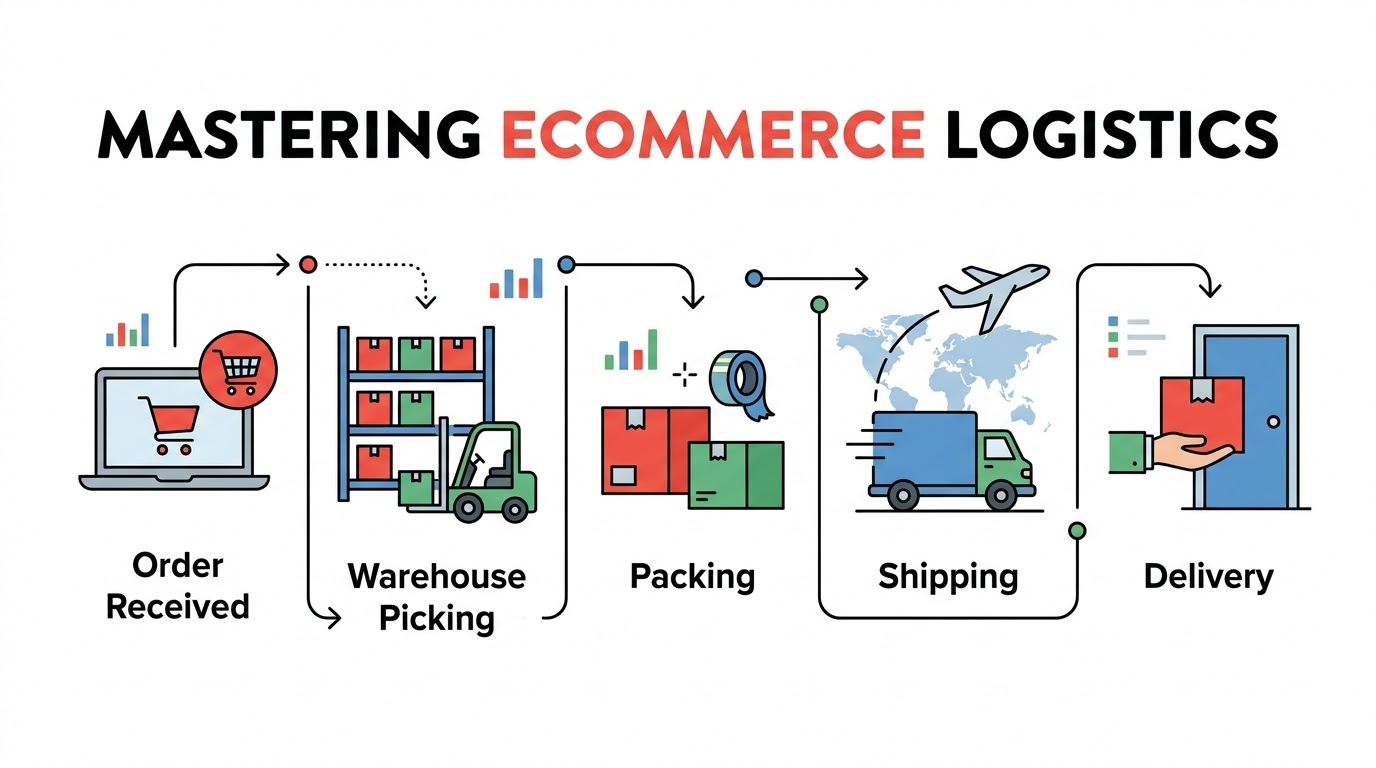
Another key component of ecommerce logistics is order fulfillment. The process usually follows a few simple steps:
- Order received: The order enters the system, and the purchase details are recorded.
- Picking: Warehouse staff locate the products listed in the order and retrieve them from storage shelves or bins.
- Packing: Orders are placed into the packaging and labeled with the appropriate shipping information.
- Labeling: A shipping label (with delivery address, tracking number, and carrier information) is attached to the package.
- Shipping: It’s then handed over to a shipping carrier, and the delivery process begins.
With a reliable fulfillment process, brands can move orders from purchase to shipment quickly, even during busy periods. Operational costs will also be lower. Less wasted labor and fewer shipping errors mean teams spend less time fixing problems and more time processing orders.
Shipping
Shipping is one of the most critical parts of order fulfillment. It’s the stage where parcels move through carrier networks and sorting hubs until they reach the customer’s doorstep.
Customers have different priorities when it comes to delivery. Some prioritize speed, others want the lowest shipping costs, and some need cross-border delivery options. That’s why there are several shipping methods businesses can offer to match customer expectations.
- Standard Shipping (Ground): The most economical option for non-urgent domestic deliveries. Orders usually arrive within several business days and are commonly used for heavier or low-margin products where cost control matters.
- Expedited Shipping: A faster option that shortens delivery time to a few days. It costs more than standard shipping but is often chosen when customers want their orders sooner.
- Same-Day Delivery: Designed for urgent orders within a local area. Packages are delivered within hours of purchase, typically using local courier networks. This option prioritizes speed but requires tighter coordination and higher costs.
- International Shipping: Used for cross-border deliveries between countries. These shipments move through global carrier networks and require customs clearance, duties, and documentation, which can extend delivery timelines.
- Local Delivery: Orders are delivered within a nearby area using local couriers or store-run delivery teams. Unlike same-day services, delivery is usually scheduled within a short window and is generally more affordable for nearby customers.
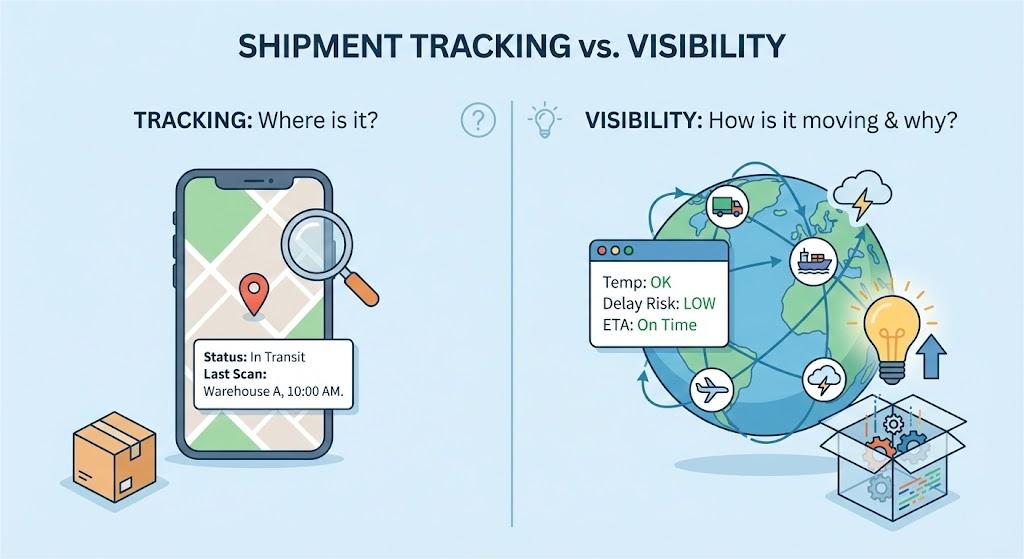
Order tracking and customer communication are also important at this stage. For customers, shipping notifications provide clear visibility into where their package is and when it is expected to arrive, which reduces their uncertainty during delivery.
Last-Mile Delivery
Last-mile delivery is the final step in ecommerce logistics, when a package travels from a local hub to the customer’s door.
It may be the last part of the journey, but it often shapes the customer’s overall impression the most. When delivery goes smoothly, it helps build trust. But when it is delayed or inconvenient, it can quickly frustrate customers.
Last-mile delivery is also one of the most expensive parts of the delivery process. Much of the cost comes from labor. Since drivers must make many stops in a short amount of time, often in crowded city areas. And other factors like fuel consumption, inefficient routes, and failed delivery attempts can make the process even slower and more costly.
For ecommerce businesses, last-mile delivery is often the hardest part to get right.
Returns and Reverse Logistics
Not all customers will be satisfied with every purchase. Returns and reverse logistics make sure these items get back to you or your warehouse efficiently.
Merchants need to manage returns carefully for both customer satisfaction and cost control. If the logistics process is slow or unclear, customers may feel frustrated with your brand. That can reduce the chances of repeat purchase.
Inefficient return handling can also force your team to spend more time inspecting items and processing refunds.
Brands that manage returns well often start with a clear returns policy. It should explain the return window, conditions, and steps in simple terms. This helps customers process returns quickly. Setting “firm rules” on what’s accepted also reduces the risk of return fraud (or policy abuse).
It’s good to provide a self-service portal where customers can initiate returns without waiting for customer support. Customers can submit their return requests, provide the necessary details, and track the status of their returns on their own. And because return details are provided in advance, teams can also process these returns more efficiently.
Challenges in Ecommerce Logistics
Handling Peak Seasons & Order Spikes
Peak seasons like BFCM and Christmas holidays are great for increased sales. But they also expose operations to supply chain disruptions.
Let’s start with how it affects internal operations. Order spikes can quickly overwhelm inventory systems. If brands don’t update their stock levels in real-time, customers may check out items that are already sold out. This may cause backorders and eventually order cancellations or refund requests.
At the same time, warehouse teams often face growing pressure on the fulfillment side. When a large wave of orders comes in at once, picking and packing take longer, and inventory updates can fall behind. It might cause fulfillment errors, such as sending the wrong order or packing the incorrect item.
Delays are another common challenge. Besides ecommerce brands, carriers also experience higher shipping volumes during peak periods. If your logistics partners’ sorting hubs or delivery routes reach capacity, shipments can sit in transit longer.
That means delivery may take longer than customers originally expected, even if your warehouse processed the order on time.
Cross-Border Logistics & Customs
Cross-border logistics create a new set of challenges for ecommerce business owners.
Imagine shipping an order from the US to Europe. Customs authorities in the destination country will review and verify the shipment before it’s released for delivery.
If you fail to provide the correct paperwork or product details beforehand, the package may be held at the border. Delivery will take much longer than expected.
International orders also involve more fees and taxes compared to domestic packages. We’re talking VAT (value-added tax), administrative fees, and tariffs. Ecommerce brands that forget to settle these charges in advance pass the burden to customers upon delivery. That’s the recipe for dissatisfied customers and refused packages.
Last-Mile Delivery Issues
Last-mile delivery is the shortest part of ecommerce logistics, but it is also the most exposed to daily shipping process disruptions.
As mentioned earlier, failed deliveries happen at this stage. It can be because the customer isn’t home during delivery, or there are access restrictions (i.e., gated communities or office reception requirements) that prevent the courier from completing the handoff.
In busy cities, traffic congestion also makes on-time delivery harder to achieve. Drivers often need to adjust their routes along the way, which can lead to higher fuel consumption.
Best Practices for Effective Ecommerce Logistics
To build a reliable ecommerce logistics operation, here are four practical approaches that improve accuracy, speed, and customer satisfaction.
1. Optimize Inventory Management
One of the most important ways to prevent fulfillment issues is by improving inventory management. Poor stock control often leads to stockouts or excess inventory, both of which hurt profitability and customer trust.
By using inventory forecasting tools, you can analyze historical sales, seasonality, and purchasing patterns to predict demand more accurately. This helps you reorder products at the right time instead of reacting after items run out. Setting reorder points and safety stock levels also reduces the risk of unexpected shortages.
At the same time, monitoring inventory turnover helps you identify slow-moving products early. With better visibility across warehouses and sales channels, your team can balance supply and demand more effectively, improve cash flow, and maintain consistent product availability.
2. Choose Reliable Shipping Partners
Carriers’ shipping performance directly affects how customers perceive your brand. Choosing the right partners requires more than comparing rates.
When evaluating carriers, consider delivery speed, service coverage, cost structure, reliability, and shipping tracking support.
Besides these basic metrics, you should also review exception rates, damage rates, claims processes, and peak season capacity. Many businesses work with multiple carriers to reduce risk and maintain flexibility.
By selecting ecommerce logistics partners based on performance data instead of price alone, you create a more stable and dependable delivery network.
3. Provide Transparent Delivery Information
Customers expect clear and timely updates about their orders.
You can meet this expectation by integrating real-time tracking into your store, so they can monitor their packages from dispatch to delivery. You can also send them notifications at key stages automatically, such as when an order ships, reaches a sorting hub, or is out for delivery.
In this way, customers don’t need to contact support, and it reduces lots of WISMO tickets. And if delays occur, proactively updating customers about the situation helps prevent frustration.
4. Implement Technology Solutions
Technology connects each part of the logistics management process and reduces manual errors.
Here are some examples of the commonly used tools:
- AI-driven forecasting systems: Use historical sales data, seasonality, and demand patterns to predict future order volumes and support more accurate replenishment planning.
- Barcode or RFID scanning: Help improve picking and packing accuracy by verifying items at each stage of fulfillment, especially during peak periods.
- Shipping API: Allow businesses to calculate shipping rates, generate labels, and validate delivery addresses through a single integration.
- Tracking API: Pull shipment updates from carriers and send tracking data to your store or internal systems for real-time visibility.
Future of Ecommerce Logistics
Ecommerce logistics is shifting as order volumes grow and customer expectations tighten. High-volume merchants are under pressure to ship faster, control costs, and expand into new markets without losing operational control.
At the same time, regulators and consumers are paying closer attention to sustainability and cross-border compliance.
Below are three major developments shaping the next phase of ecommerce logistics.
Autonomous Delivery
Autonomous delivery is gradually moving from pilot programs to real-world operations. Drones, delivery robots, and driverless vehicles are being tested and deployed by companies like Amazon handles short-distance and high-frequency deliveries.
For high-volume retailers, the main advantage is efficiency. Drones can bypass traffic and deliver lightweight parcels directly to customers in certain zones. Ground robots work well in campuses and dense neighborhoods where routes are predictable. Driverless vans are also being tested for repetitive urban routes.
However, widespread adoption still depends on local regulations, safety approvals, and infrastructure readiness. Weather, battery life, and airspace restrictions remain practical limits.
Sustainable & Green Logistics
Sustainability is becoming an important metric in ecommerce logistics. Large retailers are under growing pressure to reduce packaging waste and cut transportation emissions.
For merchants shipping high volumes, small changes can compound quickly. Using right-sized packaging reduces material waste and environmental impact. Consolidating shipments and using regional fulfillment hubs can also shrink the overall carbon footprint. Also, choosing carriers like UPS and DHL that offer electric-vehicle deliveries.
Beyond compliance, adopting sustainable logistics helps brands connect with environmentally conscious customers.
Cross-Border & Global Expansion
International ecommerce continues to grow, creating new revenue opportunities for merchants willing to expand beyond domestic markets. However, cross-border logistics introduces complexity.
Merchants must manage customs documentation, import duties, taxes, and country-specific regulations. Tariff changes and trade policies can affect margins overnight. Delivery timelines are also harder to predict due to inspections and multi-carrier handoffs.
High-volume retailers often respond by partnering with global third-party logistics (3PL) providers, pre-paying duties through Delivered Duty Paid (DDP) models, and placing inventory in regional warehouses to shorten transit times and reduce customs friction.
Conclusion
That’s it for this guide on ecommerce logistics.
As online competition grows, logistics is no longer just an operational task behind the scenes. Customers are far more likely to trust and make repeat purchases at stores that offer a smooth delivery experience.
Creating a more efficient logistics often starts with better shipment visibility across the delivery process. Tools like TrackingMore help merchants monitor shipments across 1,500+ carriers in one platform and offer proactive shipping notifications to customers.
Ecommerce Logistics FAQs
Ecommerce logistics focuses on delivering individual orders directly to customers as part of modern supply chain management. Traditional logistics usually moves large shipments between manufacturers, warehouses, and distributors on fixed schedules.
In 2026, many ecommerce businesses rely on technology-driven logistics tools to keep operations efficient. Common solutions include warehouse management systems, automated inventory tracking, multi-carrier shipping platforms, and real-time shipment tracking. Some merchants are also investing in AI forecasting tools and regional fulfillment centers.
Key challenges under cross-border ecommerce logistics are customs rules, taxes, and import regulations of each destination country. Orders may be delayed during customs checks if paperwork or product details are incomplete. International shipments also involve VAT, tariffs, and other fees, which can lead to unexpected costs for customers if merchants do not calculate and settle them properly.
Last-mile delivery is critical because it is the final step where customers receive their orders. This stage is more exposed to real-world disruptions such as traffic, incorrect addresses, or failed delivery attempts. And it’s the most expensive part of ecommerce logistics due to high labor and transportation costs.
Easton has 3 years of experience researching and writing about e-commerce and logistics. She enjoys sharing the latest industry trends and insights with readers.